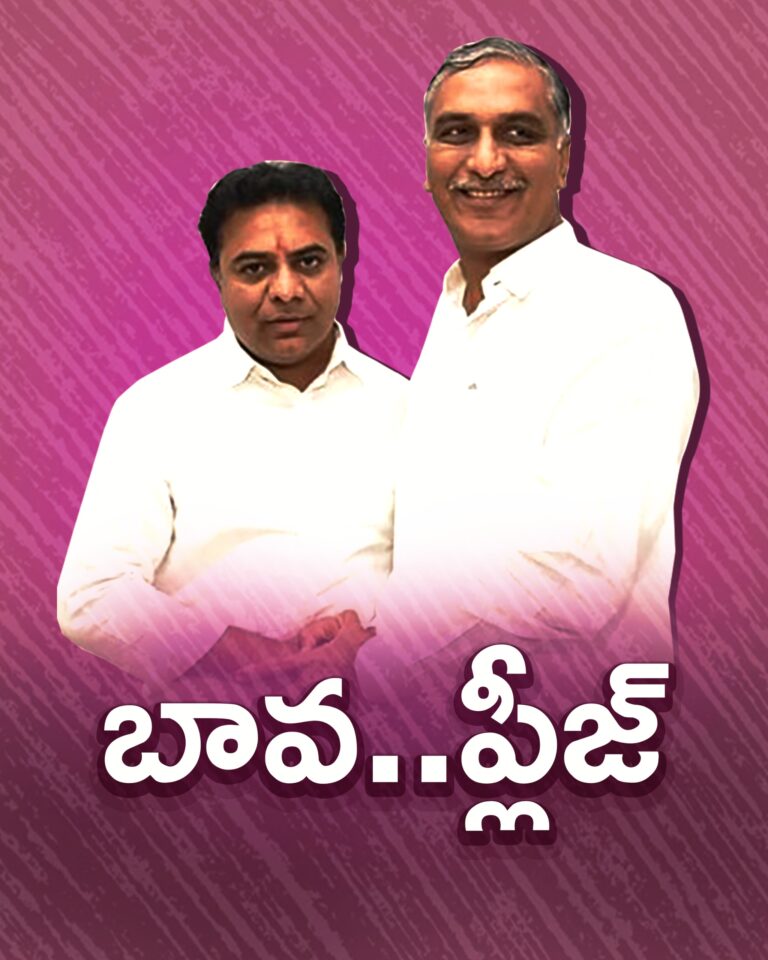
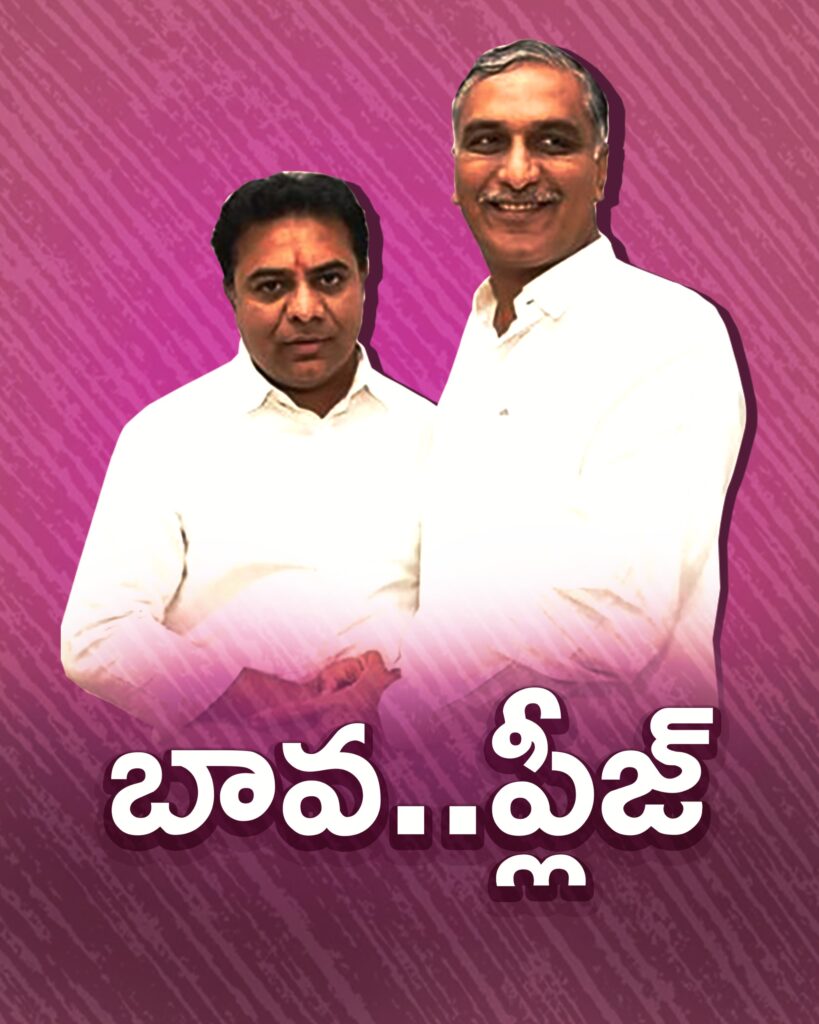
Has the long-standing tension within the BRS party between K.T. Rama Rao (KTR) and Harish Rao finally come to an end? Are the brothers-in-law now on the same page? Following a recent meeting with KTR, Harish Rao has maintained a reserved demeanor and remained silent on party developments, leading to speculation that some sort of compromise may have been reached between the two.
Initially, BRS chief K. Chandrashekar Rao (KCR) entrusted Harish Rao with the responsibility of organizing the party’s 25th anniversary celebrations. However, for reasons unknown within the party and family, KTR later stepped in and took complete control — planning, coordinating, and executing the entire event. Observers believe KCR used this event to promote KTR as his political heir.
Reliable sources say Harish Rao, who has toiled for the party since its inception and earned a reputation as a troubleshooter, felt sidelined for not being given due importance. Reportedly, he changed his earlier decision of attending the event on foot, instead arriving by car — a move seen by insiders as symbolic of his displeasure. These developments have fueled analysis that a rift indeed existed between the two.
Even after Harish Rao publicly declared on May 13 — during a press meet at Telangana Bhavan — that he was ready to work under KTR’s leadership, the fact that KTR visited Harish Rao’s residence for lengthy discussions on May 16 and 17 suggests that not everything was smooth on the surface. While the official word was that they discussed party strengthening, analysts believe the actual conversation was much deeper.
According to close sources, during his discussion with KTR, Harish Rao expressed his dissatisfaction over being sidelined, reminding that he has stood by KCR since the party’s formation and worked loyally for its growth. He reportedly conveyed strongly that being humiliated despite his integrity and commitment was unacceptable and warned that he wouldn’t hesitate to take tough decisions if such incidents repeated.
Following this, sources suggest KTR agreed to restore Harish Rao’s importance in the party and assign him responsibilities equal to his own. Insiders from both camps claim that a truce was indeed struck between the two brothers-in-law. Reportedly, KTR agreed to entrust Harish Rao with the role of in-charge for the party’s frontal organizations and also offer another key post with state-level influence. It is believed that this decision will be made public only after a discussion with KCR.
Recently, after receiving notices related to the Kaleshwaram project, Harish Rao met KCR twice at his Erravelli farmhouse. It’s said the reconciliation with KTR came up in these discussions, during which KCR reportedly advised Harish not to rush into making it public and to continue coordinating with KTR for now.
In summary, while there appears to be a compromise between the two key leaders, it remains to be seen how this new understanding plays out within the BRS power dynamics.
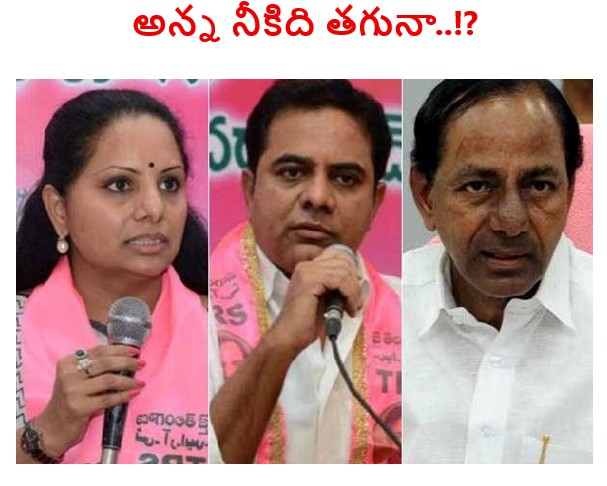
A major development has recently come to light in Telangana politics. Until now, it was only a rumor that BRS chief KCR’s daughter Kavitha had written a letter to him about internal party issues. But now, the letter Kavitha wrote to her father has surfaced. Judging by its content, it isn’t just a letter — it’s being described more like a “letter-weapon.”
There had already been speculation that Kavitha was upset, particularly with her brother KTR’s actions within the party. Now, the contents of the letter have confirmed that speculation as absolute truth. Though Kavitha did not mention KTR directly in the letter, the issues she raised have put the BRS party in a tight spot.
Now that the letter is public, its contents are open for all. But what compelled her to write it? Was it only about power and dominance within the party? Is she merely clashing with her father and brother over internal control? Or are there deeper reasons? Sources within BRS claim that there are indeed deeper issues.
It’s quite natural for Kavitha to aspire for a key role in the party. She contributed to the Telangana movement through Telangana Jagruthi, has served as an MP, and is currently an MLC. Given her movement background and political experience, her desire for prominence in the party is understandable. However, the reasons for her writing the letter reportedly go beyond these visible aspirations.
According to party insiders, her discontent didn’t begin with recent developments. Kavitha’s frustration appears to have originated around the time her name surfaced in the Delhi Liquor Scam. Going back, when her name first came up in the liquor scam, “She was asked in a TV interview, ‘Did KCR scold you over the liquor scam?” At that time, Kavitha firmly denied it, saying it wasn’t true. But now, ongoing developments and discussions within the party suggest that her anger stems from deeper betrayals.
Reason 1:
Kavitha reportedly did not receive sufficient moral or logistical support from her family during the liquor scam. In fact, while she was in jail, she allegedly didn’t get the response or backing she had expected from her father and brother. It is said that there was a lack of cooperation from them both in helping her legally and politically during that tough phase.
Reason 2:
Another reason was the blame game after the party’s electoral defeat. Kavitha and her close associates believe that KTR and his followers intentionally ran a campaign within the party pinning the blame for the loss on her. According to Kavitha’s side, this wasn’t just anger-fueled talk — they are convinced it was a deliberate and strategic defamation, which further disheartened her.
Reason 3:
Last but not least, there are murmurs within BRS that both her father and brother told her not to remain politically active. Kavitha’s close associates claim this is not mere gossip but actual fact. Even if she wasn’t given control or dominance after coming out of jail, she was at least hoping to stay politically relevant. But being asked to stay inactive is something she could not accept lightly.
Conclusion:
It is now being said that Kavitha is extremely angry with her brother. She reportedly believes that KTR played a key role in politically sidelining her. She suspects that her brother created misunderstandings between her and their father, widening the gap. Even though she tried expressing her dissatisfaction to her father on several occasions, it seems to have had no effect. Hence, according to sources close to her, she had no option but to pour out her emotions in a letter. At this point, discussions are heating up within BRS circles that this “letter-weapon” was launched not for her own political future — but to expose KTR’s true nature to the outside world.
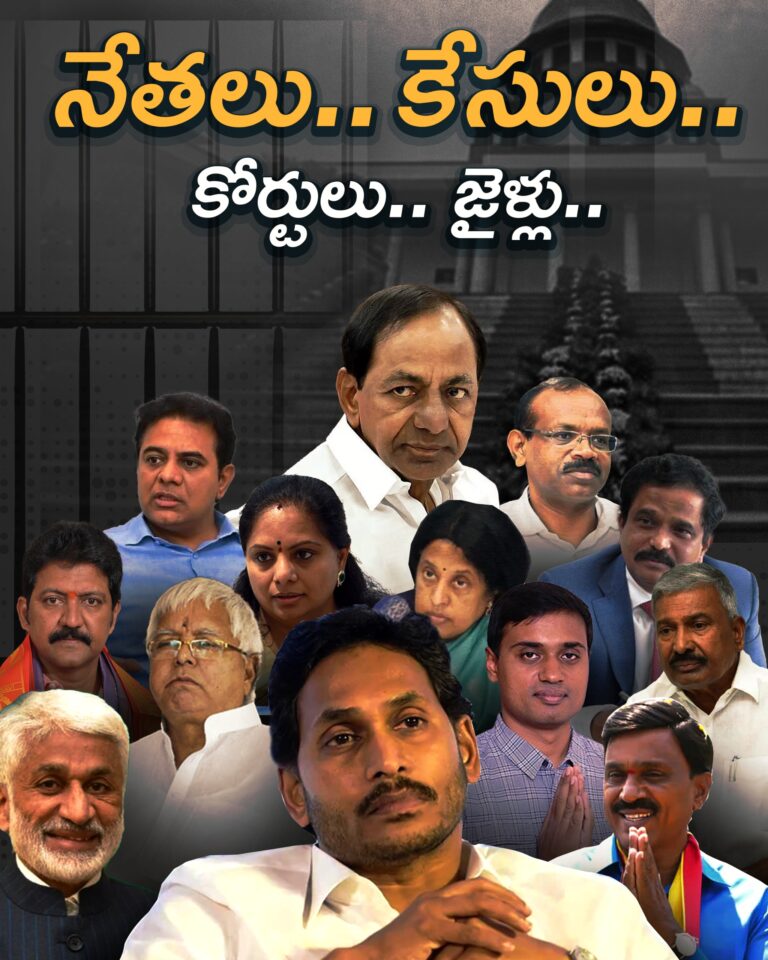
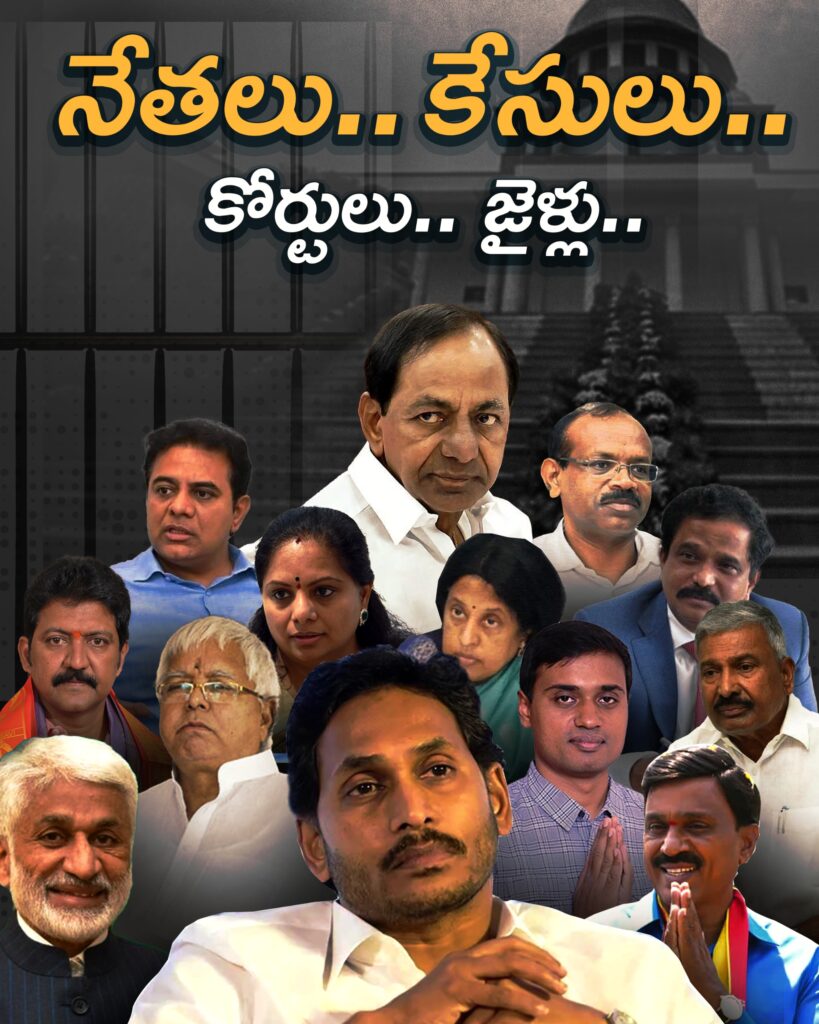
A curious political debate is unfolding in the Telugu states. The developments from the 2009–2014 period seem to be repeating themselves. Exactly 15 years ago, similar political scenes played out in the undivided Andhra Pradesh, and now, there’s a growing perception that those same events are happening again in both Andhra Pradesh and Telangana. And what is the buzz all about? It’s about leaders and jails.
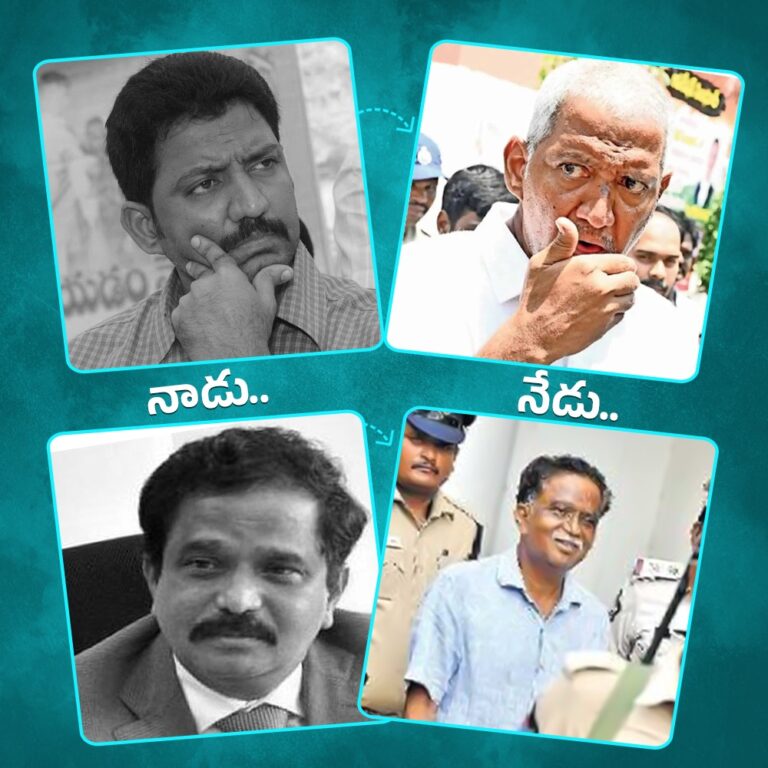
Yes, both in AP and Telangana, this is the latest trend. The current governments are initiating investigations into the actions and decisions made during the ten years of KCR’s rule and the five years of Y.S. Jagan Mohan Reddy’s leadership. Already, some political leaders and a few bureaucrats have ended up in jail. There is a strong likelihood that more officers and key leaders might be imprisoned soon. There’s even speculation that YSRCP chief and former CM Y.S. Jagan Mohan Reddy might be arrested. As part of this debate, Jagan’s wife Bharathi Reddy’s name is also being mentioned, if not directly, at least indirectly.
Among the general public—especially among neutral observers—questions are being raised: Why can’t leaders do politics cleanly? Knowing that corruption might lead them to jail, why do they still risk it all just for money? Why are they so desperate? People are baffled. From Lalu Prasad Yadav, Gali Janardhan Reddy, Jagan Mohan Reddy, Vijayasai Reddy, Peddireddy Ramachandra Reddy, Mithun Reddy, Sajjala Ramakrishna Reddy, to Chandrababu, Lokesh, Achchennaidu, KCR, KTR, Kavitha—many political leaders have corruption cases filed against them. Add to that several IAS and IPS officers. Some are already in jail, some have served time, and others are expected to go behind bars soon.
Even those who have already been to jail seem to repeat the same mistakes. Ask them why, and each will give a different reason. Politicians typically claim that they are being targeted by rivals, that false cases are filed to stop their rise—this is the stereotyped story you hear every time. But the question still arises: If they know prison is a possible outcome, why continue indulging in white-collar crimes? Is it a habit? Or is there some deeper reason? When party heads themselves engage in wrongdoing, doesn’t it set a precedent for their fellow leaders and workers to do the same?
If we analyze the reasons behind this behavior, politics itself is the root cause. Positions of power and authority draw people into politics. Forming parties and contesting elections require enormous sums of money. In a single assembly constituency, if three strong candidates are contesting, the expenditure per segment can go up to ₹150 crores. On average, each party may need to spend ₹40–50 crores per seat. While this number may vary across constituencies, an average of ₹40 crores per seat is a fair estimate.
Accordingly, to contest across Andhra Pradesh, a political party would need to spend at least ₹7,000 crores. In Telangana, that estimate is around ₹4,760 crores. And even after spending this much, there’s no guarantee of winning. Thus, the political game becomes more complex, filled with strategies and counter-strategies. With so much money at stake, those who gain power naturally look to recoup their investment. Politics has turned into a business. When politics becomes business, amassing wealth becomes a habit. Since they are in power, rules and regulations are often ignored. They justify this by saying: “This money isn’t for us, it’s for running the party.” The mindset becomes: corruption isn’t wrong.. not doing it is.
Another reason for this blatant behavior is the enormous faith in the inefficiency of our legal system. Corruption cases don’t get resolved quickly. Especially those involving political leaders take years. Even if they are resolved, it often takes a lifetime. The Y.S. Jagan Mohan Reddy illegal assets case is a prime example. It has been 14 years since the case was filed. While some investigation has taken place, the pace is extremely slow, and it’s unlikely to be resolved anytime soon. During these 14 years, Jagan has even served as CM of Andhra Pradesh for five years. If the timing had favored him, he might have won again. But in the 2024 elections, the public verdict went against him. Now, he’s the Leader of the Opposition, and he confidently says he will win the next election. This sends a clear signal to politicians: corruption cases don’t progress quickly in court, so they can continue their politics unchecked.
Even after serving jail time, some politicians show no signs of slowing down. One more reason is the hero worship culture. There was a time when going to jail was seen as a matter of shame. Now, it’s viewed as a boost to political image. Leaders calculate the political mileage they can gain from a jail stint. Some even mentally prepare for jail as a badge of honor. In Jagan’s case, efforts were made to portray him as a hero after his jail episode. This appealed to many Telugu politicians. Now, some believe that jail time is crucial to political success.
However, Jagan lost the 2014 election after coming out of jail. He won in 2019 but lost again in 2024. In contrast, Chandrababu Naidu went to jail and then won, but that win was largely due to the public’s strong anti-incumbency against Jagan’s government—not merely because Naidu had been jailed. Revanth Reddy also won after serving time, but that was largely due to widespread opposition to KCR’s family by the 2023 elections, which worked in Congress’s favor. Arvind Kejriwal went to jail and still lost. So, there’s no real correlation between serving time and electoral success. Yet, for some reason, jail has become a political badge of honor.
After Jagan’s jail stint, portraying him as a hero had a deep impact on other politicians. Now, they see jail time as an asset to their political career. They’re mentally prepared for it, even consider it a privilege. When politicians think like this, they are no longer afraid of prison, and as a result, are not deterred by the risk of corruption. The mindset becomes: “So what if I go to jail? It’s just jail.” This attitude is spreading rapidly.
When political leaders behave like this, some bureaucrats are acting even worse. Some IAS and IPS officers are openly cooperating with their political bosses, breaking rules without hesitation. Officers like Dhanunjay Reddy and Srilakshmi (IAS), and PSR Anjaneyulu (IPS) have been arrested. Yet, many others refuse to change their ways. Some corrupt IAS officers not only indulge in graft but even advise ministers and CMs on how to make money. This is inexcusable. When news breaks that an IAS officer has gone absconding, it’s deeply shameful. But rather than feeling guilty, many officers seem to be taking such matters lightly.
To sum it up—politics, governance, court cases, and jail time have all become normalized today. Now, it’s all about bail, jail, and the CM’s chair. If this system is to change, the change must come from the people. Voters must be aware and discerning—knowing what’s good, what’s bad, who deserves their vote, and who doesn’t. Until such awareness spreads, we might see changes in political analysis, but we won’t see real change in society.
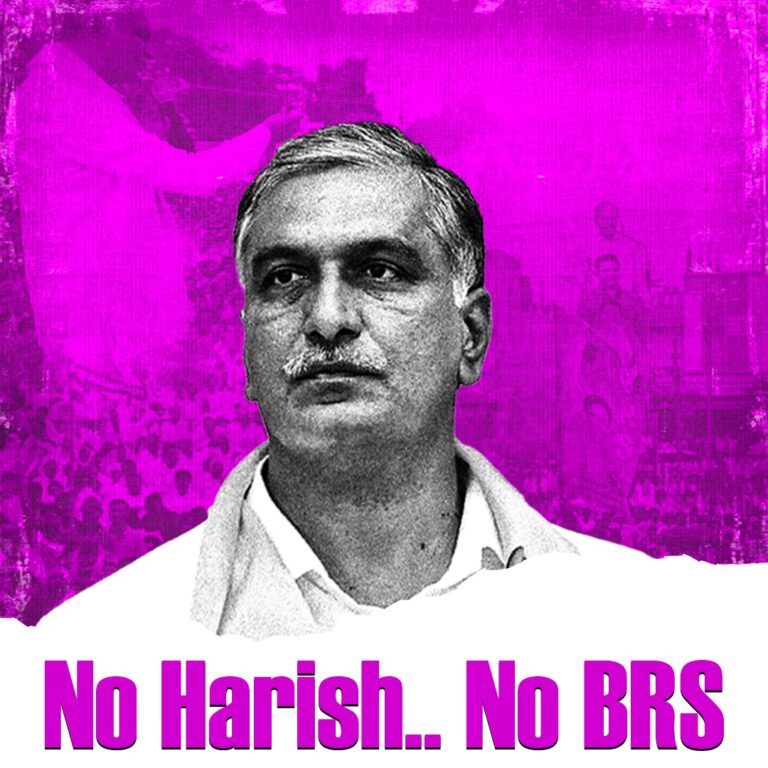
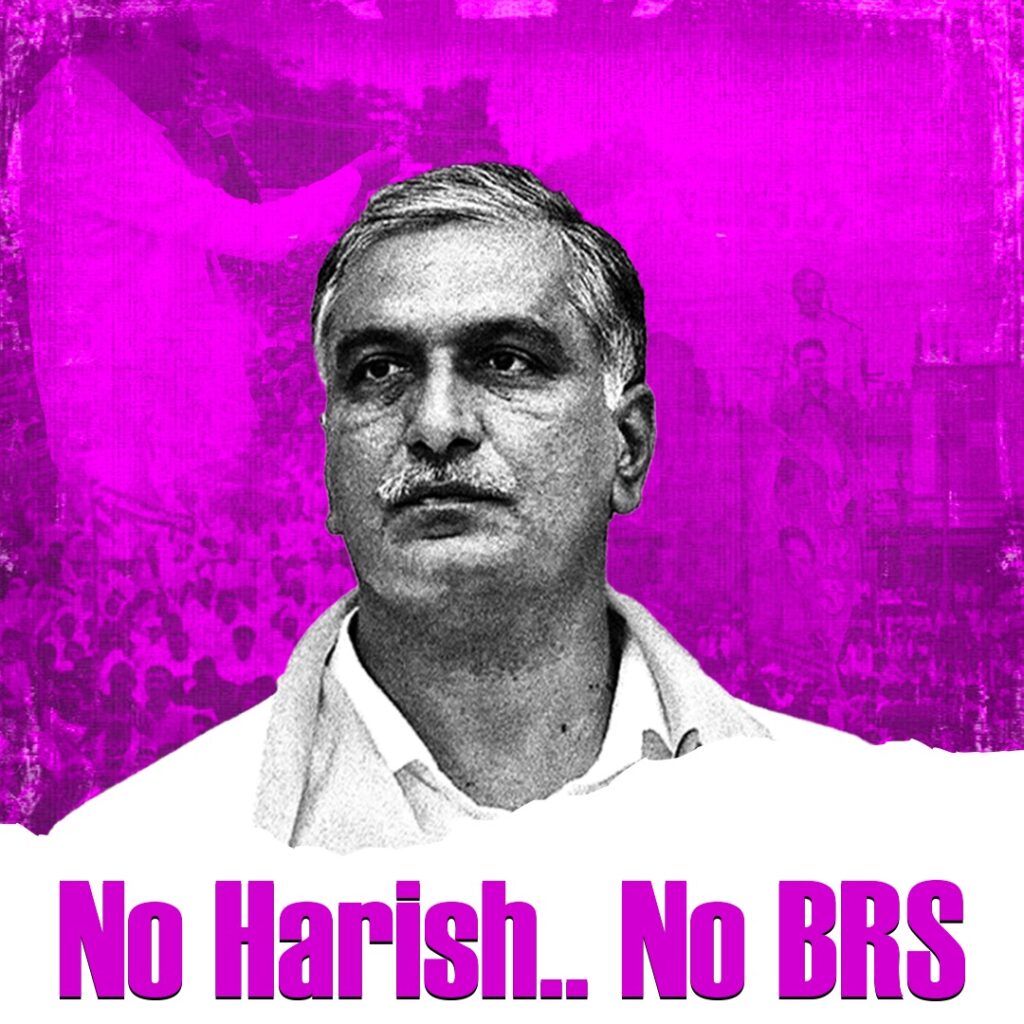
Harish Rao has long been tagged as the “Trouble Shooter” of BRS, ever since the party’s inception (formerly TRS). Whenever KCR faced crisis within the party, Harish’s leadership skills effectively resolved the turmoil, revitalizing the party. His strategic acumen was also evident in Revanth Reddy’s defeat in Kodangal during the 2018 elections. However, after returning to power for the second term, KCR began sidelining Harish. He was initially excluded from the Cabinet, and even KTR was kept away briefly to avoid backlash. Later, KTR was appointed as the party’s Working President, and both were eventually inducted into the Cabinet. But Harish’s influence was systematically diluted, reducing his prominence in the party.
Harish was confined to Siddipet and Hyderabad, barred from campaigning elsewhere, and subjected to intense pressure. Known for his patience, Harish endured this silently. By the time of BRS’s Silver Jubilee celebrations, tensions peaked. KCR and KTR openly undermined Harish’s role. Initially announced as the in-charge for the Warangal public meeting, the venue was abruptly shifted to Medchal, where KTR took center stage, sidelining Harish. Later, the event was moved back to Warangal, but Harish’s presence was erased, with the stage dominated by KCR and KTR. By April 27, the Silver Jubilee event felt more like a platform to hand over party responsibilities to KTR.
Harish’s loyalists, who shared struggles with him, grew anxious about his future. Many who saw him as a future CM began exploring alternatives. Speculations arose… some suggested he join BJP, others urged him to start his own party. Yet, Harish remained silent, weathering the storm with his trademark patience.
Meanwhile, a new crisis emerged with KCR’s daughter, MLC Kavitha Kalvakuntla. Her remarks—indirectly criticizing KCR’s governance, questioning per capita income during KCR regime and hinting at “unfinished social justice goals” “By stating, ‘It remains unfulfilled even now…’, Kavitha has indirectly levied criticism squarely at KCR.” However, KTR has been boasting that the per capita income growth was robust during KCR’s tenure. This sparked fresh debates. Rumors swirled about her writing a letter expressing dissent and even floating a new party. These developments deepened suspicions of internal strife in BRS.
In a dramatic turn, Harish re-emerged as the “Trouble Shooter.” KTR personally visited Harish’s home twice for discussions, signaling a truce. This move, amid the Kavitha controversy, underscored Harish’s indispensability. Party circles buzzed with the phrase, *”What a change in such a short time!”*
Conclusion: BRS politics remains incomplete without Harish Rao. His resurgence proves that despite attempts to sideline him, his role as the crisis manager is irreplaceable. The recent twists highlight one truth: Harish’s absence reduces BRS’s political heft to zero.
Just as Etela Rajender was hoping to take charge of the Telangana BJP any day now, a notice from the Kaleshwaram Commission seems to have thrown a wrench into his plans. At a time when he was expecting an appointment letter from the BJP high command confirming his role as the state president, receiving a summons from the Commission instead has clearly come as an unwelcome development. For Etela, who was confident that he had Amit Shah’s blessings and believed the state presidency was his for the taking, this new twist has created fresh complications.
In light of these developments, the big questions are: Will the BJP go ahead with the state president appointment? And if they do, will it still go to Etela? Or will the party now say, “Sorry, boss”?
Technically, Etela could have turned the notice from the Kaleshwaram Commission into an advantage. He could have used it as ammunition against KCR, who once targeted him over assigned lands. But instead, Etela is directing his attacks at Chief Minister Revanth Reddy. While saying that he will cooperate with the Commission, he is also lashing out at Revanth, accusing him of committing the same mistakes KCR did — particularly with regard to the Devarayamjal land issue.
Etela has stated that he is not afraid of Revanth Reddy’s threats and warned the CM to remember that the BJP is in power at the Centre. On one hand, Etela claims he’s unshaken by intimidation — on the other hand, he seems to be issuing veiled threats of his own, reminding Revanth of the BJP’s central authority.
With this Commission notice, Etela is now facing two types of troubles. First, there’s concern that the inquiry might cast a shadow over his long-anticipated appointment as BJP state president. Second, he’s caught in a dilemma over what to say in front of the Commission. If he admits that KCR committed wrongdoings, it implicates him as well, since he was part of that Cabinet. But if he defends KCR, critics will accuse him of still standing by his former boss even after joining the BJP. Thus, Etela finds himself stuck between a rock and a hard place. Perhaps that’s why he’s now launching attacks on Revanth Reddy — possibly as a strategy to shift focus or reclaim some political ground amid the pressure from the Commission.
Former Chief Minister Kalvakuntla Chandrashekar Rao, who once claimed that the Kaleshwaram project was built with every drop of his blood, is now being haunted by the very same Kaleshwaram — like a serpent turning on its master. The tenure of the P.C. Ghose Commission has ended. Reports suggest that the Commission’s findings are ready and may be submitted to the government any day now. But suddenly, an unexpected twist: the Irrigation Department’s Principal Secretary, Rahul Bojja, issued orders extending the Commission’s term by another two months.
Just when BRS cadre thought the storm had passed, this move jolted them once again. Criticism began pouring in, with some calling it not a “Kaleshwaram Commission” but a “Congress Commission.” While political accusations fly, the burning questions remain — will KCR appear before the Commission? Will he seek relief from the courts, as he did in the power sector commission case? What revelations will emerge from the Kaleshwaram inquiry? What will the Commission’s report state? What action will the government take based on it? And ultimately, will the allegations of corruption surrounding Kaleshwaram reach KCR?
When he was in the Opposition, Revanth Reddy was relentlessly pursued by the KCR family. No one expects Revanth to let them off the hook so easily now. However, there’s a stark contrast between the two leaders. KCR held no restraint when targeting his opponents. He wouldn’t hesitate to jail them under any pretext, breaking into their homes if needed and showing no mercy. Revanth Reddy, however, is taking a different path. He wants KCR and his associates to face legal consequences — but through lawful and procedural means. He’s cautious to ensure the public doesn’t perceive any personal vendetta.
That’s why, so far, there haven’t been aggressive actions in cases like the phone tapping scandal, the E-formula car race, or the electricity commission inquiry. Government insiders say Revanth wants airtight evidence and irrefutable proof before proceeding to the final stage in any case. His aim is to legally pin down the accused without leaving any loopholes.
Take the Kaleshwaram case for instance — the P.C. Ghose Commission has had its term extended five or six times already. Several engineers and top officials were called in repeatedly. Affidavits were collected from some of them. The ACB raided former ENC Hariram and unearthed details of his disproportionate assets. Simultaneously, vigilance inquiries are ongoing. Along with the Commission probe and the Vigilance investigation, there is also a report from the National Dam Safety Authority. All this points to the government’s firm determination to gather conclusive evidence and establish guilt against the previous regime.
Hence, just when everyone assumed the Commission would conclude without directly questioning KCR and his team, the government triggered fresh panic in the BRS cadre by extending the Commission’s term again by two months.
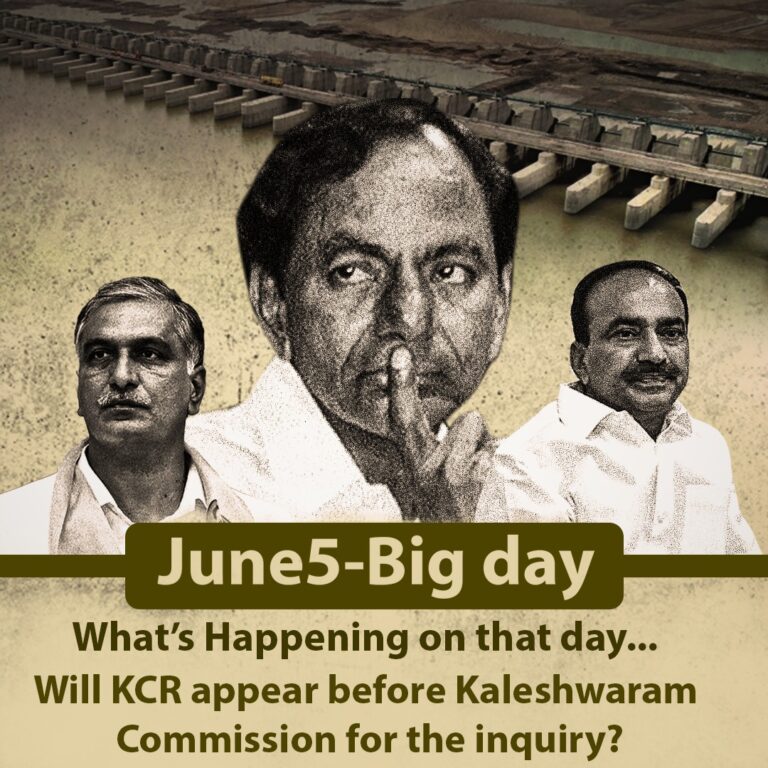
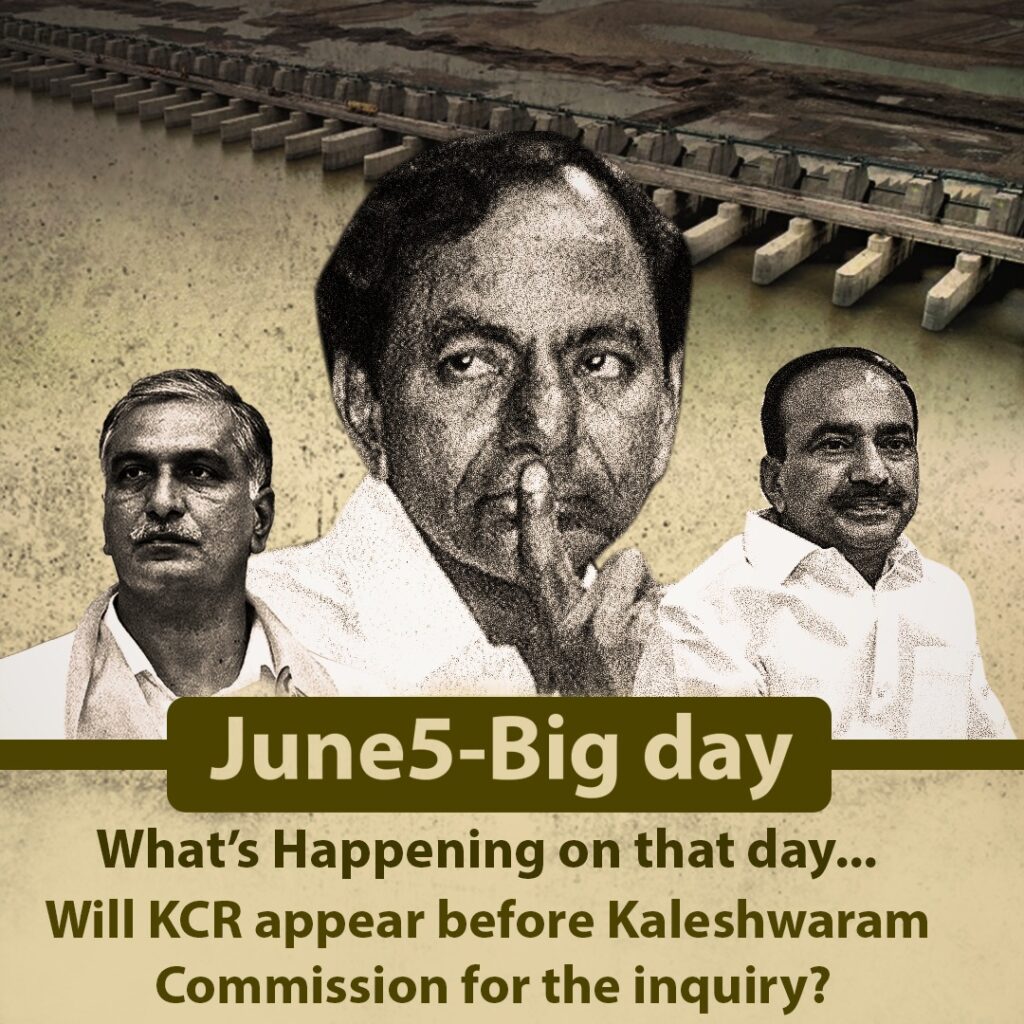
This signals a new phase in the inquiry — what was until now an administrative-level investigation is now moving towards direct political accountability. The Commission, which had until now only questioned officers and water experts, is now summoning political leaders — starting with KCR on June 5. Will he appear? Or will he seek legal relief to avoid it? If he does appear, what will he say in front of the Commission?
If KCR appears on June 5 and Harish Rao follows on June 6, it would signal a major turning point in the inquiry. However, if KCR skips the summons and only Harish Rao shows up, the political consequences could be significant. Such a scenario could trigger talk that while Harish is trying to prove his integrity, KCR is attempting to dodge responsibility.
Adding more intrigue, KCR’s former close aide Etela Rajender is also scheduled to appear before the Commission on June 9. What he says could be even more sensational. KCR had targeted Etela harshly over endowment and assigned lands, subjecting him to financial and psychological distress. Will Etela spill the beans before the Commission? Or will he tread carefully and align with the BRS narrative out of loyalty to his former boss?
That’s now the hot topic across Telangana’s political circles.
Amaravati AP means Andhra Pradesh. However, after the division.. AP got another name.. Amaravati and Polavaram. These two are key projects for the development of AP.. for the all-round development of all sections. It has been seen that such key projects have not progressed much in the last five years. The previous government, chanting the mantra of decentralization of development and saying that there is no need for the construction of a capital.. that the state can be led on the path of development in all sectors through three capitals.. has stalled the Amaravati project. The construction of the Polavaram project, which is the lifeline of another state, took only a very limited step during the previous government. Only 3-4 percent of the work in the construction of the Polavaram project was done during Jagan’s tenure. Furthermore, the Jagan government did not implement the R&R package for the displaced as promised. As if this was not enough.. the diaphragm wall was damaged due to the attitude of the previous government leaders.. officials.. Now the situation is that a new diaphragm wall needs to be constructed. This is Amaravati. The situation regarding the Polavaram projects was the same before the coalition came to power.
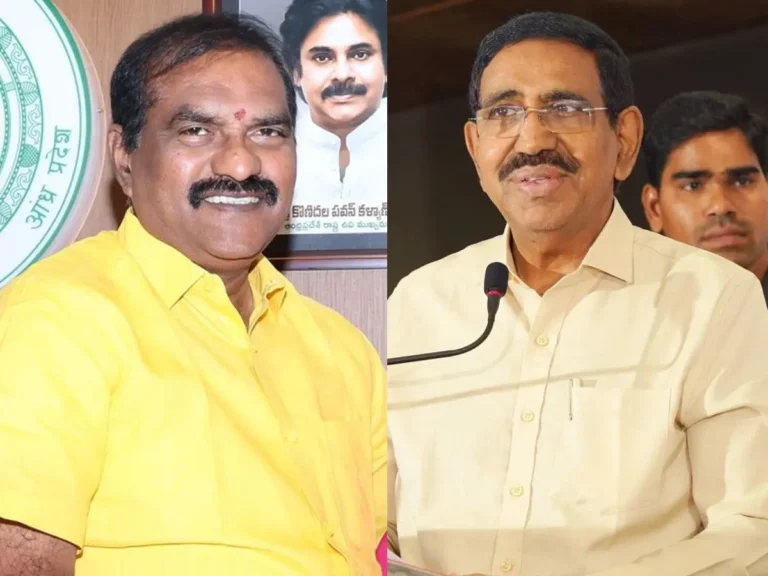
However, the TDP-Janasena-BJP alliance achieved a stunning victory in the 2024 elections. This has led to a movement in the construction of Amaravati and Polavaram projects. In this context, an interesting discussion is going on in the AP administration and political circles. It is said that a running race is now taking place between the ministers related to the Amaravati and Polavaram projects. Narayana and Nimmala are the ministers for both of these, which are the most important projects for the state. Who will complete the projects under their respective jurisdictions first. Which minister will bring a shape to these projects quickly. Who will dedicate these projects like growth engine and lifeline to the nation as soon as possible has now become a hot discussion. Nimmala is already in the front row in this running race. The construction work of the Polavaram project has already started. The work is also progressing rapidly. Minister Nimmala Ramanaidu confidently says that Polavaram will be completed by 2027. But the Amaravati project under Minister Narayana’s purview has not yet been fully launched. Although the Center has announced that it is ready to provide financial support for the construction of the capital, there is a lot of discussion that Minister Narayana has failed to activate it immediately. There is a lot of discussion that Minister Narayana has failed miserably in lobbying bankers. Another argument is that the re-launch of the Amaravati project has been delayed due to Narayana’s pressure to cooperate with some contractors.
Whatever the case may be, CRDA sources say that Amaravati has a chance of getting the project completed sooner than the Polavaram project. Even if the re-launch work is delayed, the Narayana team is confident that they will be the latest to start. Since Prime Minister Narendra Modi has started the re-launch work, the funds and permissions for the Polavaram project are purely a matter for our country, but since Amaravati is linked to international organizations, it is said that it started a little late.
In this way, no matter who argues, the two ministers have shouldered very important projects. They want to get the work done, considering this not as a political matter but as a matter related to the state and its development. Experts also warn that if there is any negligence or difference in this, the people will never forgive those ministers.
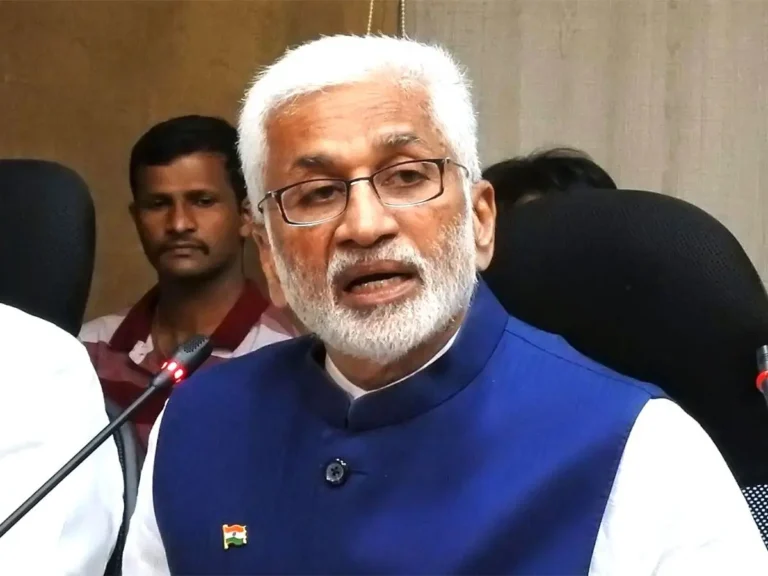
Will the protector be the cause of punishment..? Will Vijaya Sai reveal the secrets of the inner sanctum..? Will Vijaya Sai Reddy become an approver in Jagan’s disproportionate assets case..? Will Vijaya Sai provide a list of the irregularities committed by Jagan as YS Kumar along with evidence..? An interesting discussion in AP politics.
Amaravati It is said that the secret of the house is a curse to Lanka. Is the same going to happen in the case of YSRCP now..? Vijayasai Reddy, who knows the secret of the house, has now fallen out with YSRCP chief Jagan Mohan Reddy. Although the reasons for that are being blamed on the coterie.. there is already a discussion in AP political circles that Vijayasai’s anger is directly directed at his former boss Jagan Mohan Reddy. As far as YSRCP.. or the YS family is concerned, Vijaya Sai Reddy is not some ordinary auditor. He is like a Vibhishan who knows all the secrets of the inner sanctum.
He is an inch-to-inch acquaintance of the assets of three generations of the YS family, namely YS Raja Reddy, YS Rajasekhar Reddy, and YS Jagan Mohan Reddy. If everything goes smoothly, the YS family, especially Jagan Mohan Reddy, will not have any problems due to Vijayasai Reddy. But in Jagan Mohan Reddy’s history, there are many cases related to economic crimes, investigation agencies like CBI and ED, FIRs, charge sheets, and cases like jails and bails. There is no doubt that Vijaya Sai Reddy knows more about every aspect of this than Jagan. Moreover, if Jagan Mohan Reddy goes to jail, Vijaya Sai will be right behind him. In a way, Jagan-Vijaya Sai Reddy have a milk-water relationship in the illegal assets case, as well as a light-dark relationship.
Such Vijayasai Reddy.. now Jagan Mohan Reddy has been divided. He resigned from the Rajya Sabha. He said goodbye to the party. It is reported that he has already explained many of the shady dealings that took place in the liquor scam to the SIT team.. to government officials. If all this is a tall order.. the investigation of the CBI-ED cases against Jagan Mohan Reddy is actually progressing at a snail’s pace. They have been lying idle for a long time. In these circumstances.. with the changed developments, there are very clear indications that all the old cases against Jagan Mohan Reddy will be queued up again and brought before the court. But now the real discussion is.. whether Vijayasai Reddy will reveal the secret related to Jagan in the CBI and ED cases is currently being discussed a lot in AP politics. There is also a lot of discussion about whether Vijayasai Reddy will become an approver in those cases. Because.. they say the reason is that Vijayasai Reddy is very serious about Jagan.. about the coterie around Jagan. Vijayasai Reddy seems to think that it is right to give priority to others besides Jagan, even if he does everything himself, and even goes to jail. With this, the discussion is going on in full swing that an agreement has already been reached with TDP leaders to reveal as many secrets of the inner sanctum as possible.
If this happens, not only will politics in AP take many turns in the future, but the debate going on in AP is very clear that the political landscape of AP will change.
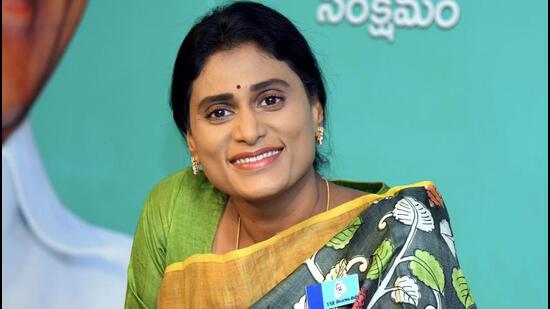
Sharmila, who organized a program to highlight the presence of the Congress party in AP.. Sharmila, who is unable to use YS Charmisha. There is a wide discussion in the Congress party about who will put the lost Sharmila on the right path.
Amaravati The Congress party died in AP politics almost ten years ago. The sin of division is haunting that party. The people of Andhra Pradesh are still unable to forgive the Congress party. They are unable to forget the mistake that the party made. Accordingly, with the emergence of the YSRCP as a strong regional party, the Congress is having to struggle to assert its presence. As part of its efforts to defeat the Congress party in the state of Andhra Pradesh, the Congress party high command considered YS’ daughter Sharmila as a part of the efforts to defeat the Congress party and make it ascend to the top. She was appointed as the PCC president.
The Congress leadership hoped that with the arrival of Sharmila, the Congress party would win at least one or two seats in the 2024 elections. But that did not come true. The YSRCP registered a huge defeat in the last elections. It was limited to only 11 seats. Sharmila is trying to take some of the credit for the YSRCP’s defeat at this level, saying that her campaign was also important. However, in the early days of the 2024 elections, it was thought that there would be a large-scale migration from the YSRCP, which suffered a crushing defeat in the 2024 elections. In that order, migration from the YSRCP to the Congress party would also come. Since Sharmila is the daughter of YS. Since YS Jagan has become an absolute flop. Everyone expected that the YSRCP leaders.. ranks would look towards their daughter.
However, YS Sharmila has turned those expectations upside down. Sharmila, who made a little fuss during the election campaign, has not been able to influence AP politics since then. Even before the elections, some people may have joined the YSRCP, but after the elections, there have been no major additions to the Congress party from the YSRCP. Isn’t it true that those who are tired of Sharmila’s behavior are leaving the party. Some others are staying in the party and are circulating as a dissenting group. Former PCC chief Shailajanadh is the most prominent among those who have left the Congress party. If the leaders are gone, they are gone. At least they can organize programs with the remaining few. But there are criticisms that Sharmila is playing around to do that too.
At this juncture, Sharmila’s undertaking of a program on the occasion of Narendra Modi’s visit to Amaravati, which was blocked by the government and police, has given up hope in the old Congress ranks. This small effort, which has made the Congress party assert its presence in AP after a long time, is making the rest of the cadre happy. Will such programs continue in the future? Or will they be thwarted again? There is a doubt in the Congress cadre.